top of page

How to Descale Your Dishwasher or Glasswasher Properly

Learn how to descale your dishwasher or glasswasher properly to improve performance, reduce limescale, and extend equipment lifespan.

How to Descale Your Dishwasher or Glasswasher Properly

In busy kitchens, it is easy to focus on day-to-day cleaning and overlook what is happening inside your equipment.
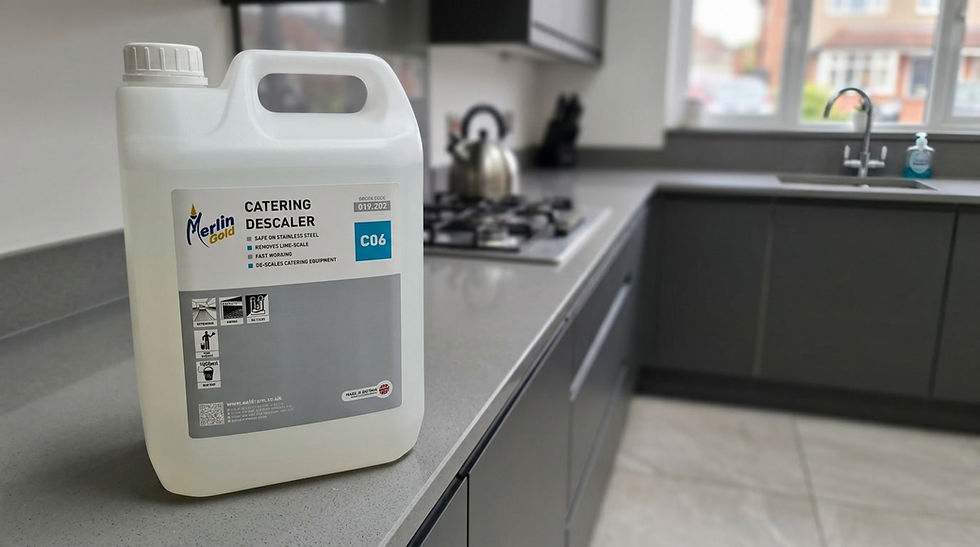

Catering descaler bottle on a modern kitchen counter. Stainless steel kettle on a stove in the background. Bright window light.

Dishwashers and glasswashers are used constantly, and over time, limescale can build up within the system. This build-up is not always visible, but it can affect performance, efficiency, and the quality of results.


Regular descaling is a simple but important part of maintaining your equipment and ensuring it continues to operate as expected.


Why Descaling Matters

Limescale forms when water is heated, particularly in hard water areas. Over time, this can coat internal components, reduce heating efficiency, and impact wash quality.


Without regular descaling, you may start to notice:

  • Poor cleaning results

  • Longer cycle times

  • Increased energy usage

  • Reduced lifespan of equipment


Taking a proactive approach helps avoid these issues and keeps machines running efficiently.


A Simple Approach to Descaling

Descaling does not need to be complicated, but it does need to be done properly.


As outlined in the Merlin Gold C6 Catering Descaler guide, the process typically involves isolating the machine, draining it fully, and running a controlled cleaning cycle using a descaling solution.


The key is allowing the product time to work effectively while ensuring the machine is properly rinsed before returning to normal use.


A white jug labeled "Merlin Catering Descaler" with text and symbols. It removes limescale and is C06 coded. Made in Britain.

MERLIN C06 CATERING DESCALER - 2x5ltr

  • Safe On Stainless Steel

  • Works Fast

  • Removes Catering Limescale

  • Concentrated

Use to Remove Limescale On Most Kitchen Surfaces. Taps, Worktops, Around Dishwashers & Bain Maries.


Key Steps to Follow

While exact processes may vary depending on equipment, a standard descaling routine includes:

  • Turning off any automatic chemical dosing systems

  • Draining the machine completely

  • Refilling with clean water

  • Adding the appropriate amount of descaler

  • Running the machine to allow the solution to circulate

  • Draining and rinsing thoroughly with fresh water


The guide highlights a total process time of around 40 minutes, depending on the level of scale and machine type.


Taking the time to complete each stage properly ensures the best results.


Consistency Is Key

Descaling is not a one-off task. The frequency will depend on:

  • Water hardness

  • Machine usage

  • Type of operation


In high-use environments such as hospitality or catering, more regular descaling may be required to maintain performance.


Building it into a routine maintenance schedule helps avoid unexpected issues and keeps operations running smoothly.


Getting the Best Results

Like many cleaning processes, descaling works best when it is done consistently and correctly.


Using the right product, following the correct process, and allowing enough time for the solution to work all contribute to better outcomes.


It is not just about removing scale, but about protecting equipment, maintaining hygiene standards, and ensuring reliable performance.


Keep Your Equipment Running Smoothly

A well-maintained dishwasher or glasswasher does more than clean effectively. It supports the overall efficiency of your kitchen and helps avoid unnecessary downtime or repair costs.


Regular descaling is a simple step that can make a big difference over time.

If you would like advice on descaling products, equipment care, or building a maintenance routine that works for your business, the Seldram team is always happy to help.

Keeping You Informed: Market Updates and Supply Chain Changes

Keeping You Informed: Market Updates and Supply Chain Changes

Keeping You Informed: Market Updates and Supply Chain Changes
Why Floor and Carpet Care Is More Than Just Cleaning

Why Floor and Carpet Care Is More Than Just Cleaning

Why Floor and Carpet Care Is More Than Just Cleaning
Why Floor and Carpet Maintenance Matters More Than You Think

Why Floor and Carpet Maintenance Matters More Than You Think

Why Floor and Carpet Maintenance Matters More Than You Think
Cleaning Products for Healthcare Environments: What to Consider

Cleaning Products for Healthcare Environments: What to Consider

Cleaning Products for Healthcare Environments: What to Consider

How to Descale Your Dishwasher or Glasswasher Properly

  • May 1
  • 2 min read

In busy kitchens, it is easy to focus on day-to-day cleaning and overlook what is happening inside your equipment.


Catering descaler bottle on a modern kitchen counter. Stainless steel kettle on a stove in the background. Bright window light.

Dishwashers and glasswashers are used constantly, and over time, limescale can build up within the system. This build-up is not always visible, but it can affect performance, efficiency, and the quality of results.


Regular descaling is a simple but important part of maintaining your equipment and ensuring it continues to operate as expected.


Why Descaling Matters

Limescale forms when water is heated, particularly in hard water areas. Over time, this can coat internal components, reduce heating efficiency, and impact wash quality.


Without regular descaling, you may start to notice:

  • Poor cleaning results

  • Longer cycle times

  • Increased energy usage

  • Reduced lifespan of equipment


Taking a proactive approach helps avoid these issues and keeps machines running efficiently.


A Simple Approach to Descaling

Descaling does not need to be complicated, but it does need to be done properly.


As outlined in the Merlin Gold C6 Catering Descaler guide, the process typically involves isolating the machine, draining it fully, and running a controlled cleaning cycle using a descaling solution.


The key is allowing the product time to work effectively while ensuring the machine is properly rinsed before returning to normal use.


A white jug labeled "Merlin Catering Descaler" with text and symbols. It removes limescale and is C06 coded. Made in Britain.

MERLIN C06 CATERING DESCALER - 2x5ltr

  • Safe On Stainless Steel

  • Works Fast

  • Removes Catering Limescale

  • Concentrated

Use to Remove Limescale On Most Kitchen Surfaces. Taps, Worktops, Around Dishwashers & Bain Maries.


Key Steps to Follow

While exact processes may vary depending on equipment, a standard descaling routine includes:

  • Turning off any automatic chemical dosing systems

  • Draining the machine completely

  • Refilling with clean water

  • Adding the appropriate amount of descaler

  • Running the machine to allow the solution to circulate

  • Draining and rinsing thoroughly with fresh water


The guide highlights a total process time of around 40 minutes, depending on the level of scale and machine type.


Taking the time to complete each stage properly ensures the best results.


Consistency Is Key

Descaling is not a one-off task. The frequency will depend on:

  • Water hardness

  • Machine usage

  • Type of operation


In high-use environments such as hospitality or catering, more regular descaling may be required to maintain performance.


Building it into a routine maintenance schedule helps avoid unexpected issues and keeps operations running smoothly.


Getting the Best Results

Like many cleaning processes, descaling works best when it is done consistently and correctly.


Using the right product, following the correct process, and allowing enough time for the solution to work all contribute to better outcomes.


It is not just about removing scale, but about protecting equipment, maintaining hygiene standards, and ensuring reliable performance.


Keep Your Equipment Running Smoothly

A well-maintained dishwasher or glasswasher does more than clean effectively. It supports the overall efficiency of your kitchen and helps avoid unnecessary downtime or repair costs.


Regular descaling is a simple step that can make a big difference over time.

If you would like advice on descaling products, equipment care, or building a maintenance routine that works for your business, the Seldram team is always happy to help.

bottom of page